If you take payments online, 3D Secure is worth understanding properly. It is one of the main tools merchants use to reduce fraud risk, protect revenue, and add another layer of cardholder verification during checkout.
But 3D Secure is not just a security setting. It also affects the customer experience. The right setup depends on your business, your customers, and how much checkout friction you can afford.
This guide explains what 3D Secure is, how 3DS2 improves on the older version, and how Australian merchants can think about using it in a practical way.
What is 3D Secure?
3D Secure, often shortened to 3DS, is a cardholder authentication protocol used in online card payments. Its purpose is to help confirm that the person making the purchase is authorised to use the card.
In practice, that can mean a customer is asked to complete an extra verification step during checkout. In other cases, the authentication may happen in the background using transaction and device data.
For merchants, 3D Secure helps add protection to online payments while supporting stronger customer authentication.
Why does 3D Secure matter for Australian merchants?
3D Secure matters because online merchants are balancing two things at once: reducing fraud and keeping checkout as smooth as possible.
Used well, 3DS can help merchants:
- Reduce exposure to fraudulent transactions
- Strengthen authentication on higher-risk purchases
- Support chargeback protection in some cases, depending on card scheme rules and transaction type
- Give customers more confidence at checkout
- build a more considered approach to payment risk
For many businesses, the question is not whether 3D Secure matters. It is how to use it in a way that makes sense for the way they trade.
How does 3D Secure work?
3D Secure adds an authentication layer to an online card transaction before the payment is completed.
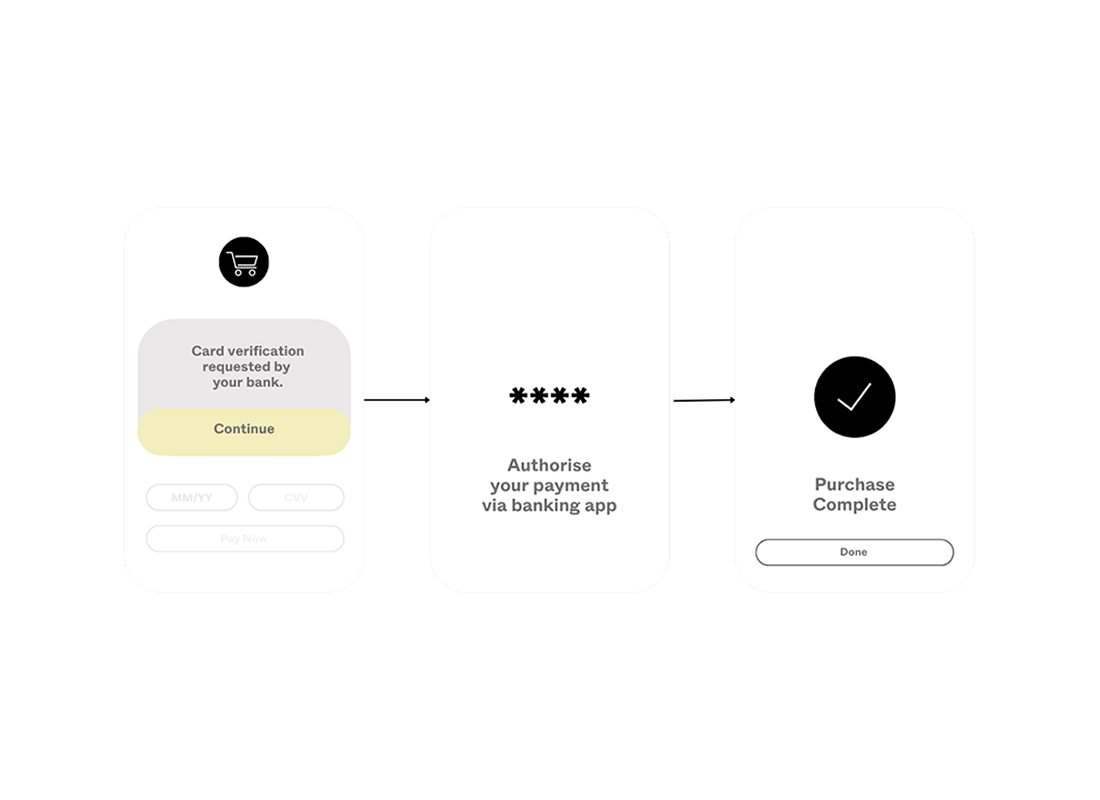
A common 3DS flow looks like this:
1. The customer enters their card details at checkout
2. The transaction is assessed for risk
3. If authentication is required, the customer is prompted to verify the payment through their
bank or banking app
4. If authentication is successful, the payment continues
Sometimes the customer will clearly see this step. Other times, especially with 3DS2, much of the process can happen with very little interruption.
Is 3DS2 better for conversion?
3DS2 is better for customer experience than 3DS1 because it was designed for modern payment journeys.
It supports better mobile usability, more flexible authentication flows, and the possibility of lower-friction verification where enough supporting data is available.
That said, any extra checkout step can affect conversion. The goal is not to remove authentication altogether. The goal is to use it where it adds value without slowing down low-risk transactions unnecessarily.
For merchants, this is where 3D Secure becomes more than a fraud feature. It becomes part of your checkout strategy.
Should small online merchants turn on 3D Secure by default?
For many small online merchants, yes.
If your business has limited fraud tooling, a small team, or lower tolerance for chargeback losses, enabling 3DS more broadly can act as a practical safety net.
This may make sense if:
- You are still building transaction history and customer trust signals
- You have a high number of first-time customers
- You sell products that attract more fraud risk
- You want stronger protection without building a highly complex fraud setup
For smaller merchants, 3DS is often one of the simplest ways to add another layer of protection to checkout.
How do larger merchants use 3D Secure differently?
Larger merchants and enterprises usually take a more selective approach.
Rather than applying 3DS to every transaction, they often use rules, risk signals, transaction data, device data, and customer history to decide when stronger authentication is worth adding. This is because enterprise businesses are often balancing two priorities at once:
- Managing fraud and meeting security requirements
- Protecting conversion by keeping checkout smooth for trusted customers
For larger merchants, 3DS is part of a broader payments strategy. It is not just about reducing fraud. It is also about managing risk without creating unnecessary friction at scale.
Learn more about ecommerce payments.
What about chargebacks and liability shift?
One of the main reasons merchants use 3D Secure is that successfully authenticated transactions may qualify for chargeback liability shift i, depending on the issuer response and the reason for the dispute.
In simple terms, that means responsibility for most chargebacks move away from the merchant when the authentication process has been completed successfully.
This is one of the strongest reasons many online merchants choose to use 3DS. It can help reduce the financial impact of fraud and make online trading easier to manage.
Because outcomes depend on the payment flow, issuer response, scheme rules, and dispute reason, liability shift should not be treated as automatic in every scenario.
How should merchants decide on the right 3DS setup?
The right setup depends on your business model, average order value, customer behaviour, fraud exposure, and tolerance for checkout friction.
A practical way to think about it is this:
If you are a smaller online merchant
A broader 3DS setup may be the right starting point if your priority is revenue protection and peace of mind.
If you are a larger ecommerce or enterprise business
A more selective setup may be better if your priority is balancing authentication, conversion, and risk at scale.
In both cases
The best setup is one that reflects the way your business actually trades, not just a default setting that has never been reviewed.
Why 3D Secure matters beyond fraud
Payment settings often look technical from the outside, but they have a real effect on business performance.
3D Secure influences:
- Fraud exposure
- Checkout flow
- Customer confidence
- Operational workload
- Chargeback risk
That is why it is worth reviewing as part of your wider payments strategy, especially if your business is growing or your fraud profile has shifted.
How ArtsPay helps
ArtsPay helps Australian businesses make payments more practical, transparent, and commercially sound.
That includes helping merchants think through payment settings that affect real outcomes, including fraud controls, checkout experience, and the way payment infrastructure supports growth.
If your business is reviewing its ecommerce payment setup, 3D Secure should be part of that conversation.
Want help reviewing your online payment flow?
If you are dealing with fraud, chargebacks, or checkout drop-off, ArtsPay can help you assess whether your current 3DS setup matches your business needs.
At ArtsPay, we're committed to helping you navigate the complexities of payment security while supporting a vibrant arts community. By using 3DS strategically, you can protect your business and provide a secure shopping experience for your customers. Support your own goals, not fraudsters.